
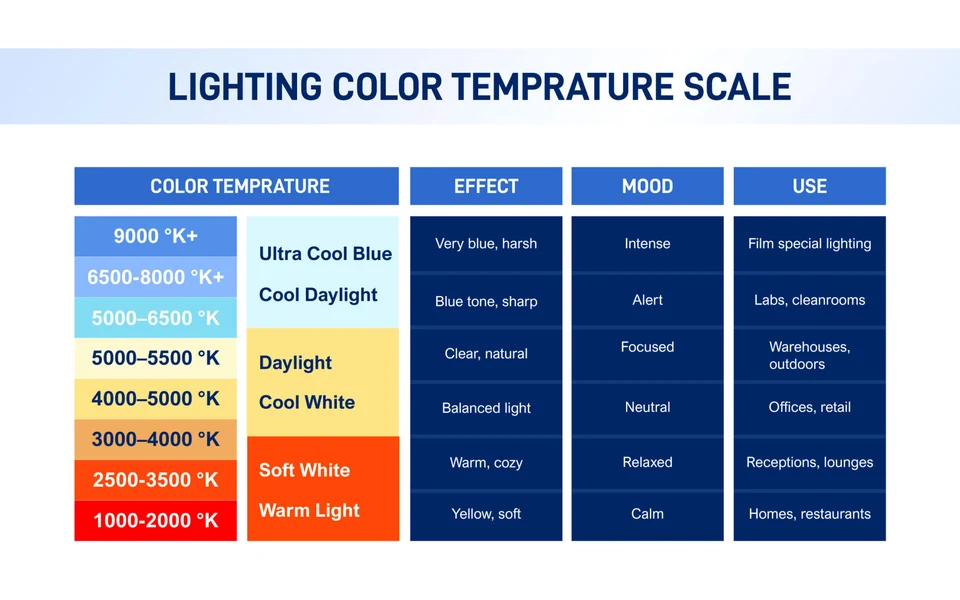
Color temperature describes the appearance of white light. It does not tell you how much light reaches a repair surface, how accurately colors appear or whether a fixture is approved for a hazardous location.
Kelvin describes appearance
Lower correlated color temperatures generally appear warmer; higher values generally appear cooler. Two lights with the same nominal CCT can still differ in color rendering, beam pattern and glare. Compare actual product data instead of treating a Kelvin value as a complete lighting specification.
Check the colors workers need to distinguish
Wiring, labels, fluid condition and surface inspection can depend on color discrimination. Review the product's color-rendering information alongside CCT. Where inspection is important, evaluate representative materials under the proposed light rather than assuming cooler light automatically shows defects better.
Compare light at the working position
Illuminance, uniformity, shadows and reflections affect the useful view. A bright source can create an uncomfortable reflection on polished metal even when its CCT seems appropriate. Check aiming, distance and beam spread before increasing output.
Keep mixed installations consistent where useful
Different sources can make the same surface look different as a worker moves through a facility. When replacing fixtures, compare neighboring light and the intended task. A sample installation helps reveal glare or color mismatch that a data-sheet comparison misses.
Energy, productivity and accident outcomes cannot be predicted from CCT alone. Use the complete fixture specification, installation and operating conditions when comparing a replacement.
References: U.S. Department of Energy — LED basics · OSHA 1926.56 — Construction illumination